
1856–1888
Early life and spiritual search
Born at Chempazhanthy in Kerala, Narayana Guru studied Sanskrit and religious texts, learned meditation and yoga, and spent years in contemplation before beginning his public reform work.
Narayana Guru
Sree Narayana Guru was a philosopher, spiritual leader, and social reformer whose work challenged caste inequality and inspired communities across Kerala and coastal Karnataka.
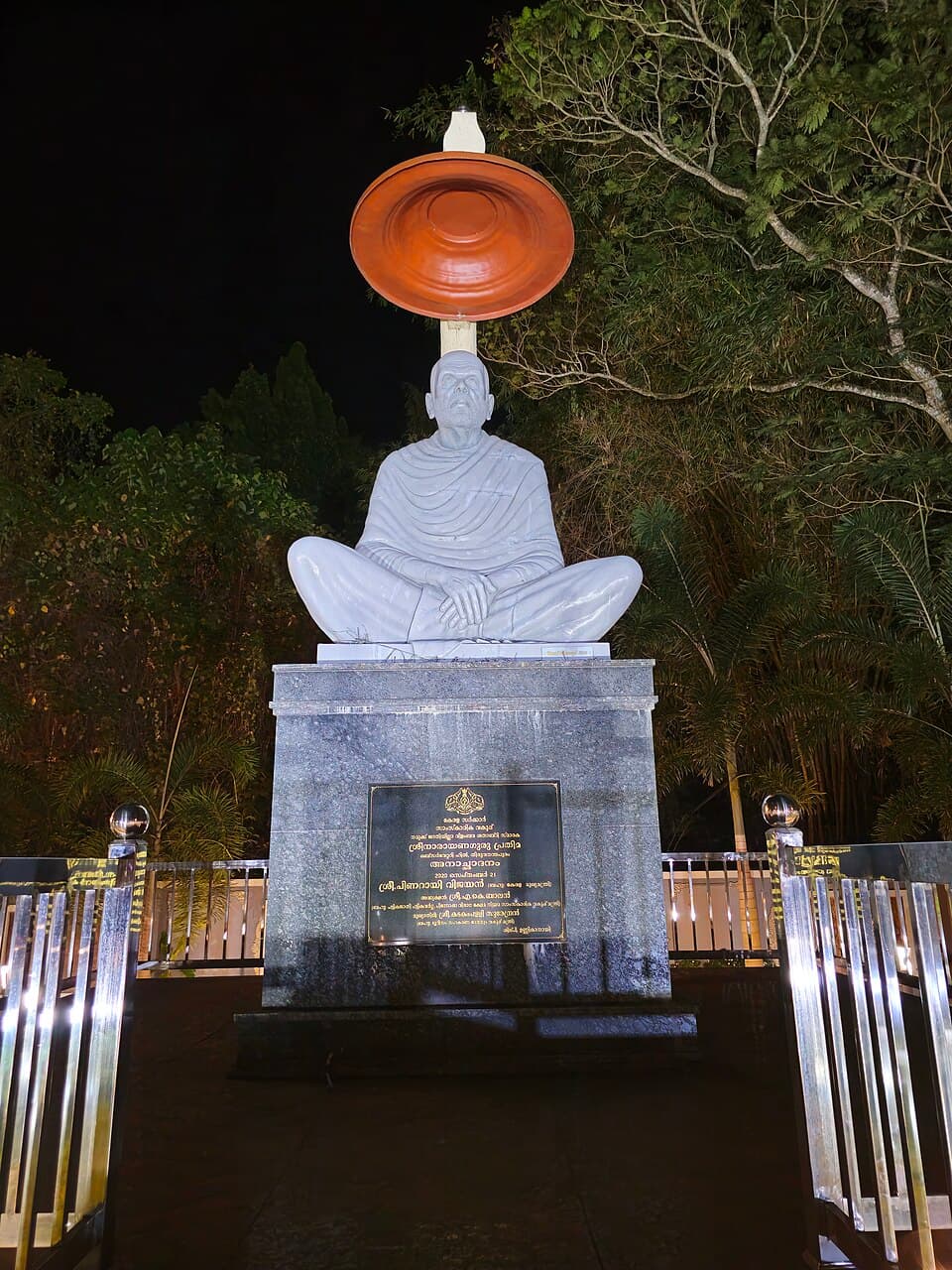
His life
From spiritual study and meditation to education, temple reform, and community organization, Narayana Guru joined inner growth with practical social change.
1856–1888
Born at Chempazhanthy in Kerala, Narayana Guru studied Sanskrit and religious texts, learned meditation and yoga, and spent years in contemplation before beginning his public reform work.
1888
At Aruvippuram, he consecrated a Shiva image in an act that challenged exclusionary caste practices and expressed his belief that spiritual dignity should not be restricted by birth.
1904–1923
Sivagiri became a base for his work in education, temple reform, social uplift, and practical self-reliance. He also encouraged dialogue across religious traditions and community organization.
1928 and beyond
Narayana Guru died at Sivagiri on 20 September 1928. His writings, institutions, and principles continue to shape conversations about equality, learning, compassion, and collective progress.
Our Billawa connection
Narayana Guru's influence reached beyond Kerala. In coastal Karnataka, his guidance became part of the Billawa community's story of dignity, organization, education, and shared progress.
Billawa leaders in Mangaluru approached Narayana Guru for guidance on a temple and community renewal. He guided the Billawa community's temple initiative at Kudroli, a connection closely associated with the Gokarnanatheshwara Temple.
His emphasis on education, unity, and self-respect offered a practical path for communities seeking greater dignity and opportunity. These principles influenced the development of Billawa institutions, associations, and service activities.
For Billawa families today, remembering Narayana Guru means carrying forward a tradition of cultural pride, mutual support, learning, and responsibility to the wider community.
His teachings
Narayana Guru joined spiritual insight with a clear concern for how people learn, work, organize, and live together.
Every person deserves respect and the chance to grow without being limited by caste or inherited status.
Learning and practical opportunity are foundations for confidence, independence, and social progress.
Communities become stronger when people work together through constructive institutions and shared responsibility.
Spiritual life should encourage compassion, reflection, and respectful understanding across religious and social boundaries.
Sources and credits
This page is a concise community-focused summary. Explore the references below for fuller historical and licensing information.
Biography reference
Background on his life, philosophy, reform work, and legacy.
Billawa community history
Community history describing the influence of Narayana Guru's principles on Billawa institutions.
Billawa community connection
Community account of Narayana Guru's connection with the Kudroli temple initiative.
Image credit
Photograph by Vis M, used under the Creative Commons Attribution-ShareAlike 4.0 International license.